
COP26 is quickly approaching (read “All you need to know about COP26” here) and with it, the need to take further environmental action. World leaders will meet in November, updating each country’s Nationally Determined Contributions (NDCs – national contributions to emissions reductions). With this, responsibility will fall on UK businesses and citizens, like you, to help make sure that we stick to our side of the deal. Here, we’ll outline some of the things you can do to help the UK stick to the Paris Agreement (limiting global warming to 1.5°C).
Carbon Reporting
Calculating the carbon footprint of your business should be see as one of your first steps. By working out your carbon footprint you find out which areas of your organisation are responsible for the most emissions. This will then allow you to target the areas where action could make the highest impact.
Understanding the footprinting process will help you to predict how much impact you’ll make and any co-benefits your actions will produce. These co-benefits may include lower bills, encouraged onsite biodiversity or a happier workforce.
Science Based Targets
Science-based targets provide companies with clearly-defined paths to reduce emissions in line with the Paris Agreement goals. Setting science-based targets and keeping them means that you are doing your bit in limiting global warming.
Businesses can go further too, encouraging others on their journeys whilst going beyond Net Zero and becoming Carbon Negative*. In order to keep Earth as healthy as possible we should not just stop putting greenhouse gases into the atmosphere, but we should start taking them out.
Supply-chain Emissions
It is estimated that over 90% of a company’s emissions will be Scope 3 emissions**, which includes those from your supply chain. So, in order to become a net zero company, you need to report and reduce the emissions associated with procurement.
The best way to approach this is to reach out to your supply chain, encourage them to make sustainable choices and highlight good practice to them (get them to join the Carbon Charter!). Helping other businesses through their journeys is absolutely vital in the battle against climate change. So, simply switching supplier should be seen as a last resort.
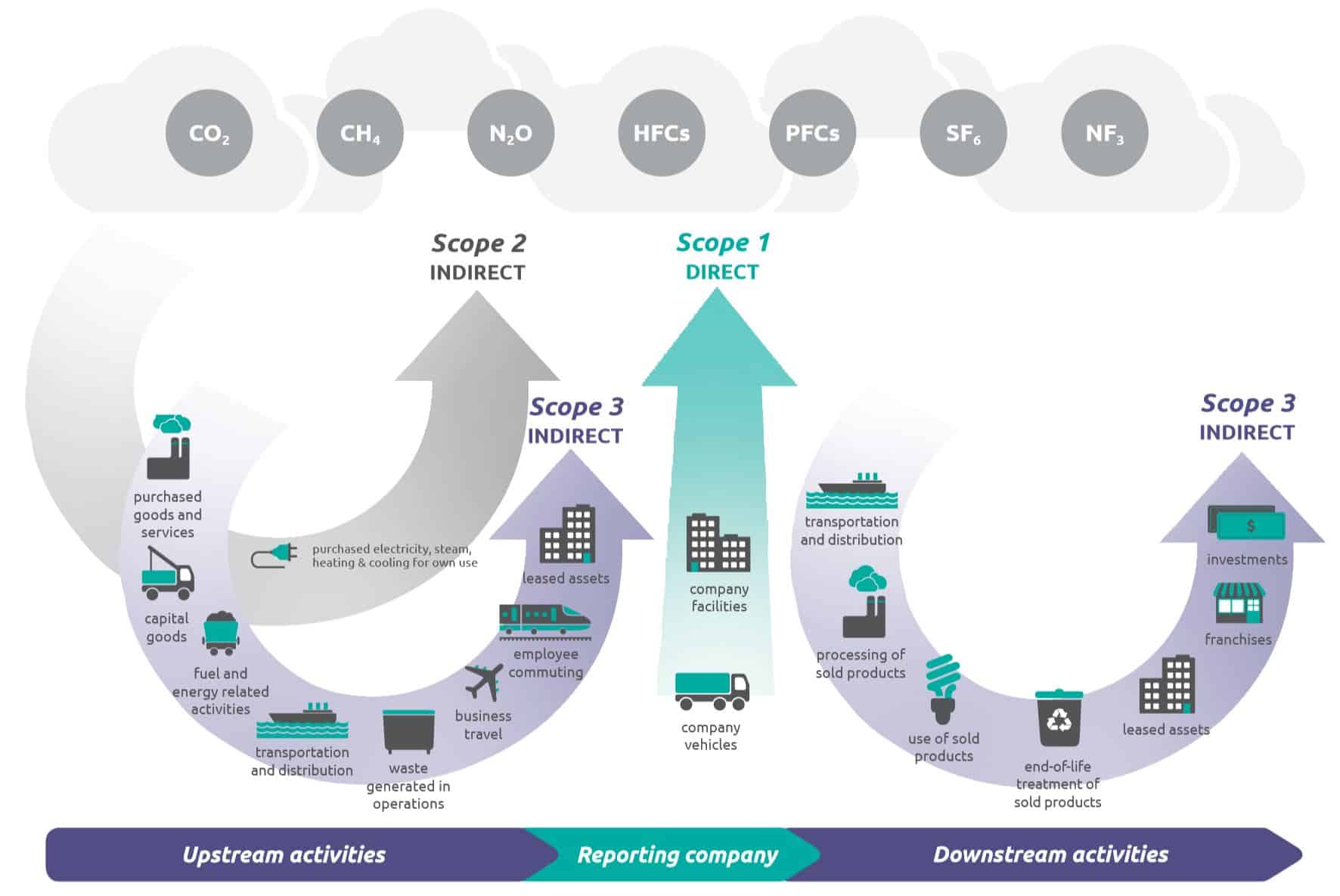
Business actions that form Scope 1, 2 and 3 greenhouse gas emissions (image from compareyourfootprint.com).
Collaboration
We can’t beat climate change by individual action alone and collaboration is a key goal of COP26. We need to work together to limit global warming to 1.5°C. It is important for every key group of stakeholders to engage with reductions targets. Governments must encourage businesses and businesses must encourage consumers. If any stakeholder is not pulling their weight, then it is the responsibility of the others to highlight and correct this.
Carbon Charter membership can help with all of the key actions raised in this blog. Carbon footprinting is one of the first steps once joining, members are encouraged to set emissions-based targets, look into their supply chains and receive access to our Member’s Directory filled with businesses looking to cut emissions. Talk to the Carbon Charter team for help with this.
Adapting an extract from a poem written by Damian Barr about the Coronavirus that yet bares striking importance to the fight against climate change: ‘Not all of us are in the same boat, but we are all in the same storm.’
Carbon Negative*: You remove more carbon dioxide from the atmosphere than you emit.
Scope 1 Emissions**: Direct emissions from owned or controlled sources.
Scope 2 Emissions**: Indirect emissions from the generation of purchased energy.
Scope 3 Emissions**: All indirect emissions (not included in Scope 2) that occur in the value chain of the reporting company, both upstream and downstream (Definitions of Scopes from https://ghgprotocol.org/).
Harry Grosvenor – Carbon Charter Assistant – Groundwork East.